

The marketing industry has entered one of the most transformative periods in its history. For decades, businesses relied on creativity, market research, and consumer insights to build meaningful connections with their audiences. While those principles remain important today, the tools available to marketers have evolved dramatically. Artificial Intelligence is no longer a futuristic concept reserved for technology companies. It has become a practical business solution that is influencing how brands communicate, how campaigns are optimized, and how customer experiences are delivered across digital channels.
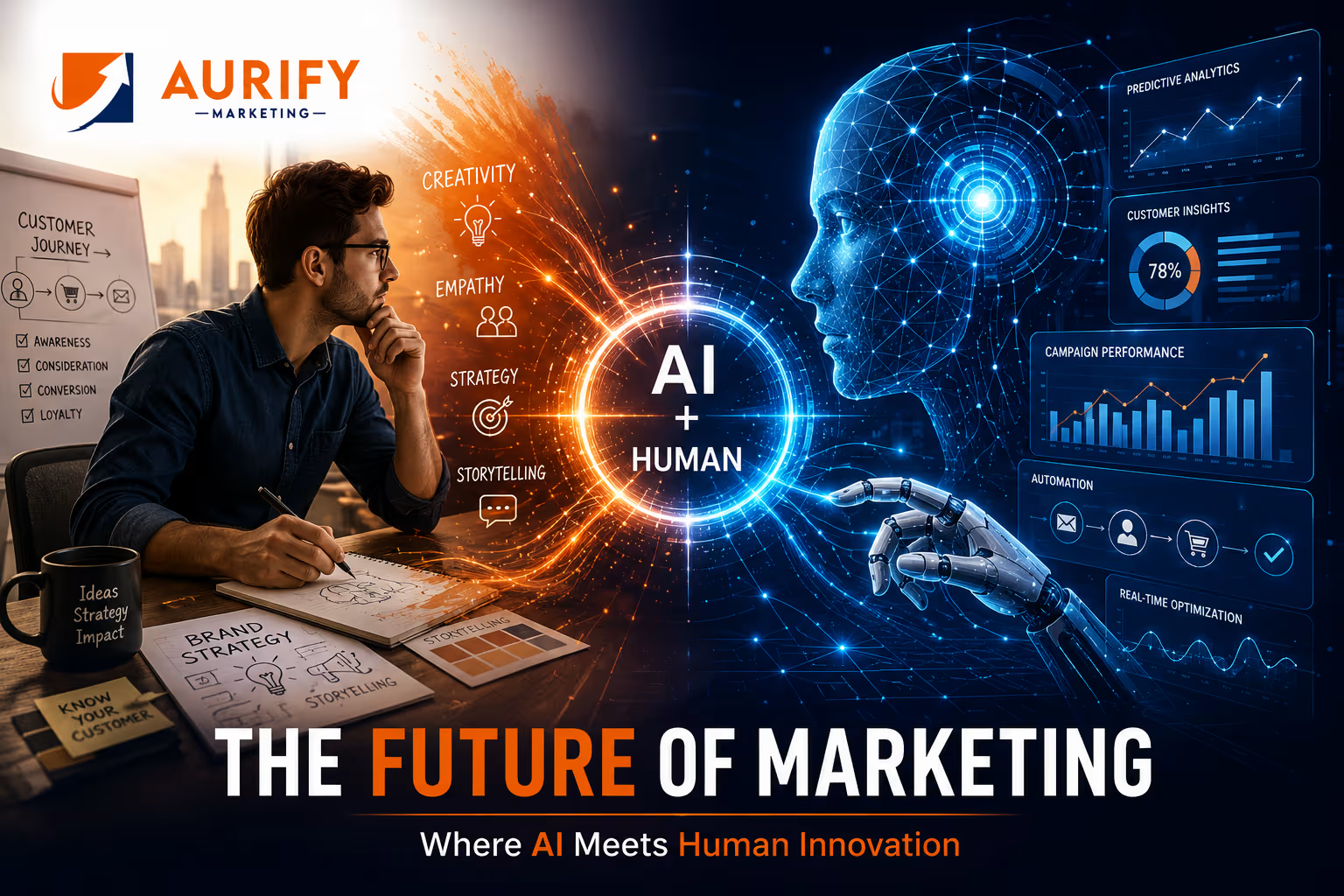
As AI continues to reshape the marketing landscape, many businesses are asking the same question: What does the future of marketing actually look like? Some believe automation will dominate every aspect of the industry, while others worry that technology could replace the human creativity that has always been at the heart of successful marketing. The reality is far more balanced. The future does not belong solely to machines, nor does it belong exclusively to human expertise. Instead, it belongs to organizations that understand how to combine both.
At Aurify Marketing, we believe the most successful businesses of the future will be those that use Artificial Intelligence to enhance human capabilities rather than replace them. AI can process data, identify patterns, and provide valuable insights at a scale that humans cannot achieve alone. Human marketers, however, bring creativity, empathy, strategic thinking, and emotional intelligence that technology cannot replicate. Together, these strengths create a powerful foundation for the next generation of marketing.
The Marketing Landscape Is Evolving Faster Than Ever
From Traditional Marketing to Intelligent Marketing
Marketing has always adapted to technological change. Print advertising gave way to television, television expanded into digital channels, and digital marketing transformed how brands engage with consumers. Every major innovation has changed the way businesses reach their audiences, but Artificial Intelligence represents a different type of transformation because it affects not just communication channels but also decision-making itself.
Modern marketers have access to more information than ever before. Every website visit, social media interaction, email click, and online purchase generates data. While this information can provide valuable insights, managing and interpreting it manually has become increasingly difficult. Businesses are no longer struggling to collect data. They are struggling to understand it.
Artificial Intelligence solves this challenge by transforming large volumes of information into actionable intelligence. Instead of spending weeks analyzing reports, marketers can identify trends, understand customer behavior, and optimize campaigns in real time. This shift allows businesses to move beyond reactive marketing and embrace a more proactive approach that anticipates customer needs before they arise.
Why This Shift Matters
Consumer expectations are changing rapidly. Modern customers expect personalized experiences, relevant content, and seamless interactions across every stage of their journey. Brands that fail to meet these expectations risk losing attention in an increasingly competitive marketplace.
AI enables businesses to understand these expectations more effectively. By analyzing behavioral patterns and customer preferences, organizations can create experiences that feel more relevant, more engaging, and more valuable. This level of personalization is becoming a defining factor in marketing success.
Artificial Intelligence Is Becoming the Foundation of Modern Marketing
Data Is No Longer the Problem
For many years, marketers focused heavily on collecting data. Today, data is abundant. The challenge lies in converting that information into meaningful insights that support business growth. Artificial Intelligence helps bridge this gap by identifying patterns and opportunities that would be difficult for humans to detect manually.
Businesses can use AI to understand purchasing behavior, identify audience segments, forecast future trends, and evaluate campaign performance. These capabilities allow organizations to make more informed decisions while reducing uncertainty. Instead of relying on assumptions, marketers can build strategies based on evidence and real-world behavior.
The Rise of Intelligent Decision-Making
One of the most significant advantages of AI is its ability to support decision-making. Marketing teams often face complex choices involving budget allocation, audience targeting, content creation, and channel selection. AI provides valuable guidance by analyzing historical performance and predicting future outcomes.
This does not mean technology replaces human judgment. Rather, it enhances it. AI delivers information, while marketers provide context. AI identifies opportunities, while marketers determine how those opportunities align with broader business objectives. The combination creates a more effective and efficient decision-making process.
Personalization Is Becoming the New Standard
Customers Expect More Relevant Experiences
The era of one-size-fits-all marketing is rapidly disappearing. Consumers are exposed to thousands of marketing messages every day, making relevance more important than ever. Businesses that fail to deliver personalized experiences often struggle to capture attention and build lasting relationships.
Artificial Intelligence makes personalization scalable. Brands can analyze customer behavior, preferences, and interactions to deliver tailored recommendations, targeted content, and customized experiences. Rather than treating every customer the same, businesses can create unique journeys that reflect individual interests and needs.
Building Stronger Customer Relationships
Personalization is not simply about increasing conversions. It is about creating stronger relationships between brands and consumers. When customers feel understood, they are more likely to engage with a business, remain loyal over time, and recommend that brand to others.
This shift is redefining customer expectations across industries. As personalization becomes more common, businesses that fail to adopt intelligent marketing strategies may find it increasingly difficult to remain competitive.
Why Human Innovation Remains Irreplaceable
Technology Cannot Replace Human Understanding
Despite the remarkable capabilities of Artificial Intelligence, marketing remains a fundamentally human discipline. Customers do not build emotional connections with algorithms. They build relationships with brands that understand their values, aspirations, and challenges.
AI can identify patterns and provide recommendations, but it cannot truly understand human emotions in the way people do. Creativity, empathy, cultural awareness, and intuition continue to play a critical role in developing successful marketing strategies.
The Power of Storytelling
Throughout history, storytelling has been one of the most effective ways to communicate ideas and influence behavior. The same principle applies to modern marketing. Consumers are drawn to stories that inspire, educate, and resonate with their experiences.
While AI can assist with research and content optimization, meaningful storytelling still depends on human creativity. The brands that succeed in the future will be those that combine data-driven insights with authentic narratives that connect with audiences on a deeper level.
.
Conclusion
The future of marketing is not being shaped by Artificial Intelligence alone, nor is it being driven solely by human creativity. The most significant transformation taking place today is the convergence of both. As businesses continue to navigate an increasingly digital and data-driven world, AI is providing the intelligence needed to understand customers, predict behavior, optimize campaigns, and uncover opportunities that were once difficult to identify. At the same time, human innovation continues to provide the creativity, empathy, strategic thinking, and storytelling that transform insights into meaningful customer experiences.
Organizations that view AI as a replacement for human talent may achieve short-term efficiency, but businesses that view AI as a partner in innovation will create stronger brands, deeper customer relationships, and more sustainable growth. Technology can help marketers understand what customers want, but only human expertise can determine how those needs should be addressed in a way that feels authentic and valuable.
At Aurify Marketing, we believe the future belongs to brands that successfully combine intelligent technology with human understanding. The companies that embrace this balance will be better positioned to adapt to changing consumer expectations, respond to market shifts, and create marketing strategies that deliver measurable results. As Artificial Intelligence continues to evolve, one principle will remain unchanged: successful marketing will always be about building meaningful connections with people. The tools may change, but the human element will continue to define the brands that lead the future.
Frequently Asked Questions (FAQs)
What does the future of marketing look like with Artificial Intelligence?
The future of marketing will be defined by a combination of AI-driven intelligence and human creativity. Artificial Intelligence will help businesses analyze data, personalize customer experiences, predict consumer behavior, and optimize marketing performance, while human marketers will continue to provide strategic direction, creativity, and emotional understanding.
How is Artificial Intelligence transforming digital marketing?
Artificial Intelligence is transforming digital marketing by enabling businesses to automate repetitive tasks, improve audience targeting, analyze customer behavior, optimize advertising campaigns, personalize content, and make faster data-driven decisions. These capabilities help organizations improve efficiency while creating more relevant customer experiences.
Will AI replace human marketers in the future?
AI is unlikely to replace human marketers completely. While technology can automate processes and provide valuable insights, marketing still depends heavily on creativity, storytelling, strategic thinking, and emotional intelligence. Human expertise remains essential for building relationships and creating meaningful brand experiences.
Why is personalization important in modern marketing?
Personalization helps businesses deliver relevant experiences based on customer interests, behaviors, and preferences. As consumers increasingly expect brands to understand their needs, personalized marketing improves engagement, customer satisfaction, loyalty, and conversion rates.
How does AI improve customer experience?
Artificial Intelligence improves customer experience by helping businesses provide personalized recommendations, faster support, more relevant content, and seamless interactions across multiple channels. These capabilities allow brands to better understand customer needs and deliver more meaningful experiences.
What role does human creativity play in AI-powered marketing?
Human creativity remains one of the most important elements of marketing. While AI can analyze information and generate insights, people bring originality, innovation, emotional understanding, and storytelling skills that technology cannot fully replicate. Successful marketing strategies depend on the combination of both.
How is AI changing SEO and content marketing?
AI is helping marketers understand search behavior, identify content opportunities, analyze user intent, and optimize website performance. However, creating high-quality content that demonstrates expertise, authority, and trust still requires human knowledge and creativity. The most effective content strategies combine AI-powered insights with authentic human expertise.
Why does Aurify Marketing believe AI and human innovation work best together?
Aurify Marketing believes that Artificial Intelligence provides speed, efficiency, and analytical intelligence, while humans contribute creativity, empathy, and strategic vision. When combined, these strengths enable businesses to create more effective marketing campaigns, stronger customer relationships, and sustainable long-term growth.