

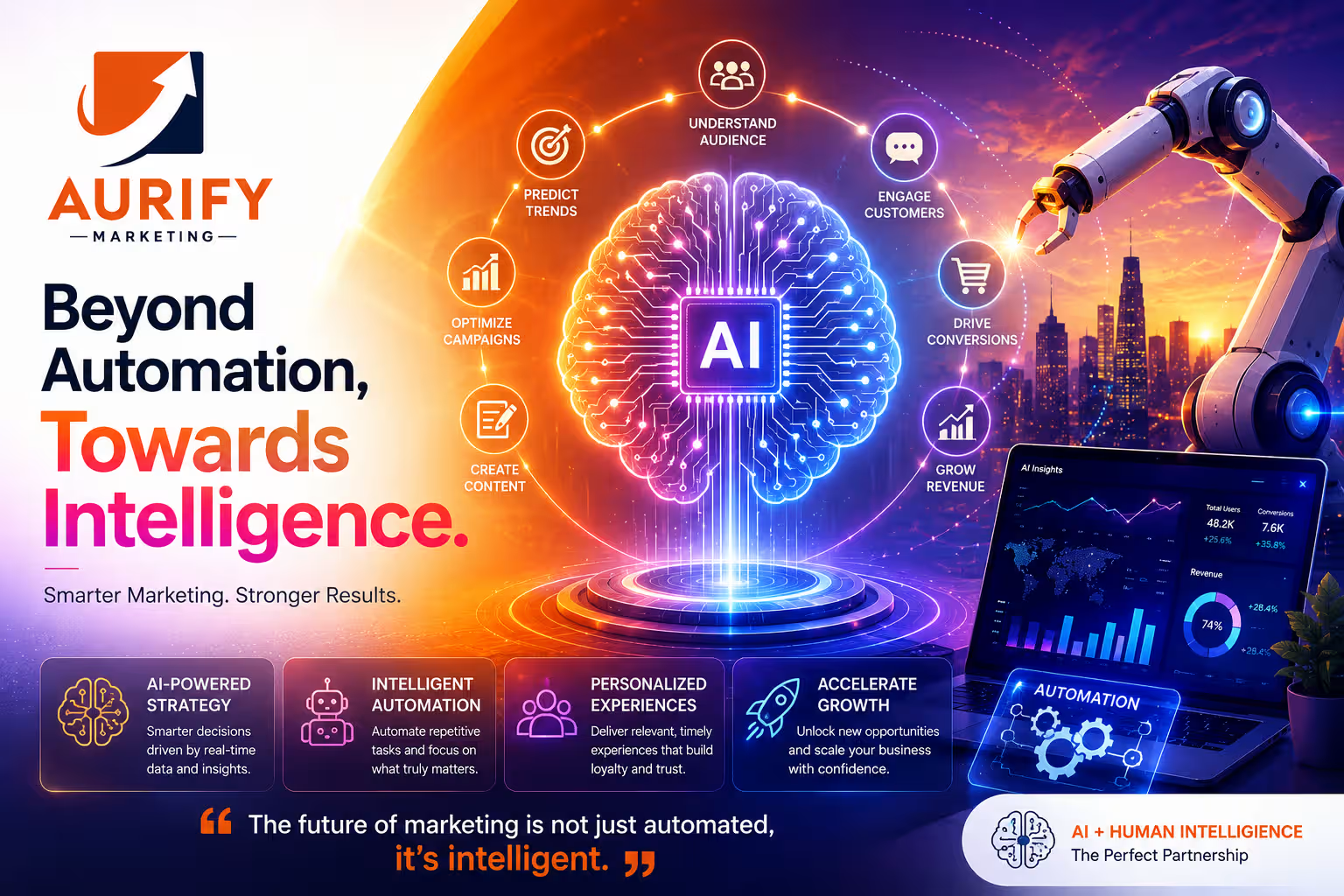
Artificial Intelligence has evolved from a futuristic concept into one of the most transformative forces shaping the modern world. Businesses across industries are investing heavily in AI-driven technologies, not simply to automate routine tasks but to gain a competitive advantage in an increasingly digital marketplace. While automation remains one of AI’s most visible applications, the future of artificial intelligence lies far beyond operational efficiency. It is moving toward a new era where machines can support decision-making, enhance creativity, improve customer experiences, and help organizations unlock opportunities that were previously impossible to identify.
At Aurify Marketing,, we believe the conversation around AI needs to shift. The future is not about replacing human effort with technology; it is about combining human intelligence with artificial intelligence to create smarter, more adaptive, and more innovative businesses. As organizations continue their digital transformation journeys, AI will become a critical component of growth strategies, influencing everything from marketing and customer engagement to product development and business operations. The companies that understand this shift today will be the ones leading their industries tomorrow.
The Evolution of AI: From Efficiency to Intelligence
The first wave of artificial intelligence focused largely on automation. Businesses adopted AI tools to streamline repetitive processes, reduce operational costs, and improve productivity. From automated customer support systems to data processing software, AI helped organizations accomplish more with fewer resources. These advancements delivered measurable value and laid the foundation for broader AI adoption across industries.
However, the technology has evolved significantly over the past few years. Modern AI systems are capable of learning from data, identifying patterns, generating content, predicting outcomes, and adapting to changing circumstances. Instead of simply executing predefined instructions, AI can now provide insights, recommendations, and strategic guidance. This transition represents a fundamental shift in how businesses use technology. The future of AI is not centered on automation alone; it is centered on intelligence. Organizations are beginning to leverage AI not just to do things faster but to do them better, making more informed decisions and creating more meaningful experiences for customers.
Why Intelligence Matters More Than Automation
Automation solves efficiency challenges, but intelligence solves business challenges. As markets become increasingly competitive, organizations need more than speed, they need the ability to understand customer behavior, anticipate trends, and respond proactively to change. Artificial intelligence provides this capability by transforming massive amounts of data into actionable insights that support smarter decision-making.
The value of AI lies in its ability to uncover patterns that humans may overlook. Businesses can analyze customer preferences, monitor market movements, predict demand, and identify emerging opportunities with unprecedented accuracy. Rather than relying solely on historical performance, organizations can use AI to forecast future outcomes and develop strategies based on predictive intelligence. This capability allows businesses to become more agile, responsive, and innovative in an environment where change is constant.
At the same time, intelligence-driven AI enables organizations to focus on long-term growth rather than short-term efficiencies. By helping leaders understand what is likely to happen next, AI shifts the conversation from operational optimization to strategic transformation. This is where the true future of artificial intelligence begins to emerge.
The Future of AI in Marketing
Marketing is experiencing one of the most profound transformations driven by artificial intelligence. Traditional marketing often relied on broad audience segmentation and generalized messaging. Brands would create campaigns based on assumptions about customer behavior and then evaluate performance after the fact. AI is fundamentally changing this approach by making marketing more personalized, predictive, and data-driven.
In the future, every customer interaction will be informed by intelligence. AI systems will analyze browsing behavior, purchasing history, engagement patterns, and contextual signals to deliver highly relevant experiences tailored to individual users. Instead of sending the same message to thousands of people, brands will communicate with customers in ways that feel personal and meaningful. This level of personalization not only improves customer satisfaction but also increases engagement, loyalty, and conversion rates.
For marketing agencies such as Aurify Marketing, AI creates opportunities to develop smarter campaigns and achieve stronger results. Content optimization, audience targeting, predictive analytics, and performance forecasting will continue to improve as AI technologies become more advanced. However, the most successful marketing strategies will still depend on human creativity, storytelling, and emotional intelligence. AI will enhance these capabilities rather than replace them.
Human Creativity and AI: A Powerful Partnership
One of the most common concerns surrounding artificial intelligence is the fear that machines will replace human creativity.. In reality, the opposite is becoming increasingly evident. AI is proving to be a powerful creative partner that enables professionals to work more efficiently and explore ideas more effectively.
Writers can use AI to generate content ideas and conduct research. Designers can leverage AI-powered tools to accelerate concept development and visual experimentation. Marketers can analyze campaign performance and identify opportunities for improvement in real time. In each of these scenarios, AI acts as a catalyst for creativity rather than a substitute for it.
The future belongs to organizations that understand how to combine human ingenuity with machine intelligence. While AI can process information at extraordinary speed, it cannot replicate human empathy, intuition, or cultural understanding. Businesses that successfully integrate these complementary strengths will be better positioned to innovate, differentiate themselves, and build stronger connections with their audiences.
The Customer Experience of Tomorrow
Consumer expectations are evolving rapidly, and artificial intelligence is playing a major role in shaping those expectations. Today’s customers want brands to understand their needs, anticipate their preferences, and provide seamless experiences across every touchpoint. Meeting these demands at scale would be nearly impossible without AI.
Future customer experiences will be increasingly intelligent and adaptive. Websites will dynamically personalize content based on user behavior. Customer support systems will understand context and intent with greater accuracy. Product recommendations will become more relevant, and interactions across channels will feel more connected and consistent.
As AI continues to advance, businesses will move beyond transactional relationships and focus on building long-term customer connections. By delivering personalized experiences at every stage of the customer journey, organizations can create stronger loyalty and establish meaningful competitive advantages in their markets.
Ethical AI Will Shape the Next Chapter
As artificial intelligence becomes more integrated into business and society, ethical considerations will become increasingly important. Consumers are more aware than ever of how their data is collected and used, and they expect organizations to act responsibly. Questions surrounding privacy, transparency, accountability, and bias will continue to influence the development and adoption of AI technologies.
Businesses that prioritize ethical AI practices will be better positioned to earn trust and maintain credibility. Transparency regarding how AI systems make decisions and how data is utilized will become a critical component of customer relationships. Responsible innovation will no longer be optional—it will be essential for long-term success.
At Aurify Marketing, we believe the future of AI must balance technological advancement with human values. The organizations that embrace this philosophy will not only achieve stronger business outcomes but also contribute to a more trustworthy and sustainable digital ecosystem.
Looking Ahead: The Intelligent Enterprise
The next decade will likely be remembered as a defining period in the evolution of artificial intelligence. AI is expected to influence nearly every industry, from healthcare and education to finance, manufacturing, and marketing. Its impact will extend far beyond efficiency gains, enabling organizations to rethink how they operate, innovate, and create value.
The concept of the intelligent enterprise is already beginning to take shape. In this model, AI supports decision-making, enhances customer experiences, accelerates innovation, and enables continuous learning across the organization. Businesses that embrace this vision will be able to respond more effectively to market changes, identify growth opportunities faster, and maintain a competitive advantage in an increasingly complex world.
Success in the AI era will depend on adaptability, strategic thinking, and a willingness to embrace new possibilities. Organizations that view AI as a long-term investment rather than a short-term trend will be the ones best positioned for sustainable growth.
Conclusion
Artificial Intelligence is entering a new phase of development one that extends far beyond automation. While efficiency will remain an important benefit, the future of AI is ultimately about intelligence, innovation, and human empowerment. Organizations that leverage AI strategically will gain deeper insights, create stronger customer relationships, and unlock opportunities that were previously beyond reach.
Aurify Marketing believes the most exciting aspect of AI is its ability to amplify human potential. Rather than replacing people, AI is creating new ways for individuals and businesses to think, create, and grow. As technology continues to evolve, the companies that combine human creativity with artificial intelligence will shape the future of business and redefine what is possible in the digital age.
Frequently Asked Questions (FAQs)
1. What is the future of Artificial Intelligence?
The future of Artificial Intelligence lies beyond simple automation. AI is expected to become more intelligent, predictive, and capable of assisting humans in decision-making, creativity, customer engagement, healthcare, education, and business strategy. Rather than replacing people, AI will increasingly work alongside them to improve productivity and innovation.
2. How will AI impact businesses in the future?
AI will help businesses make data-driven decisions, automate repetitive processes, improve customer experiences, predict market trends, and optimize operations. Organizations that strategically adopt AI technologies are likely to gain a significant competitive advantage in the coming years.
3. Will Artificial Intelligence replace human jobs?
While AI will automate certain routine and repetitive tasks, it is unlikely to replace human talent entirely. Instead, AI will transform the nature of work by allowing professionals to focus on creativity, strategic thinking, problem-solving, and relationship-building. New job roles and opportunities are also expected to emerge as AI adoption increases.
4. How is AI changing digital marketing?
AI is revolutionizing digital marketing through advanced audience targeting, predictive analytics, personalized customer experiences, content optimization, and campaign automation. Marketers can leverage AI to better understand consumer behavior and create more effective marketing strategies.
5. Why is ethical AI important?
Ethical AI ensures that artificial intelligence systems operate fairly, transparently, and responsibly. As AI becomes more integrated into business and society, issues such as privacy, data security, bias, and accountability become increasingly important. Responsible AI practices help build trust among customers and stakeholders.
6. What industries will benefit the most from AI?
Almost every industry will benefit from AI, including healthcare, education, finance, retail, manufacturing, logistics, and marketing. AI’s ability to analyze large amounts of data and generate actionable insights makes it valuable across multiple sectors.
7. How can businesses prepare for the future of AI?
Businesses can prepare by investing in digital transformation, improving data management practices, training employees in AI-related skills, and identifying opportunities where AI can enhance operations and customer experiences. Early adoption and strategic implementation will be key to long-term success.
8. Why does Aurify Marketing believe AI is the future?
Aurify Marketing believes AI represents the next phase of business innovation. Beyond automation, AI enables organizations to make smarter decisions, create personalized customer experiences, improve efficiency, and unlock new growth opportunities. When combined with human creativity and expertise, AI has the potential to drive meaningful and sustainable business success.