

The digital search landscape is evolving faster than ever before. Traditional search engines like Google are no longer the only way users discover information. Today, people also rely on AI tools, voice assistants, and generative search platforms to get instant answers.
This major shift has introduced a new concept called Generative Engine Optimization (GEO).
While Search Engine Optimization (SEO) has been the foundation of digital marketing for years, GEO is now changing how visibility works in AI-driven search systems
so the real question is:
In 2026, which strategy matters more : GEO or SEO?
The answer is not simple, but this guide will break it down clearly so you can make the right decision for your business.
What Is SEO?
Search Engine Optimization (SEO) is the process of improving a website’s visibility on search engines like Google. The main goal is to increase organic traffic by ranking higher in search results.
SEO focuses on helping search engines understand your content and determine its relevance to user queries.
How SEO Works
SEO works by optimizing different parts of a website:
Keyword research to find what users are searching for
On-page optimization (titles, headings, content)
Technical SEO (speed, mobile-friendliness, indexing)
Backlink building from authority websites
User experience (UX) improvements
These factors help search engines decide where your website should appear in rankings.
Benefits of SEO
SEO provides long-term value for businesses:
Steady organic traffic
Higher search rankings
Cost-effective lead generation
Sustainable online visibility
Even in 2026, SEO remains one of the most powerful digital marketing channels.
Why SEO Still Matters in 2026
Even with AI-driven search growth, Google still processes billions of searches daily.
SEO is still important because:
Users still click search results
Organic traffic converts better
Search engines are still the main discovery tool
Websites need authority and trust signals
SEO is not dying, it is evolving.
What Is GEO?
Generative Engine Optimization (GEO) is the process of optimizing content so that AI-powered systems can understand, summarize, and use it in generated answers.
Instead of ranking links, GEO focuses on being included in AI-generated responses.
How GEO Works
AI systems analyze content based on:
Context and clarity
Expertise and authority
Structured and informative writing
Conversational relevance
If your content is well-structured and authoritative, AI tools are more likely to reference it in responses.
Benefits of GEO
GEO gives businesses a new competitive advantage:
Visibility in AI-generated answers
Brand mentions inside AI tools
Strong authority positioning
Early adoption advantage
Future-proof search presence
GEO is especially powerful as users shift toward AI assistants instead of traditional search
Why GEO Is Becoming Important
AI search tools are changing user behavior.
Instead of clicking websites, users now ask:
“What is the best SEO strategy in 2026?”
“Which is better, GEO or SEO?”
“How do I rank on AI search engines?”
If your content is not optimized for GEO, you may lose visibility even if you rank on Google.
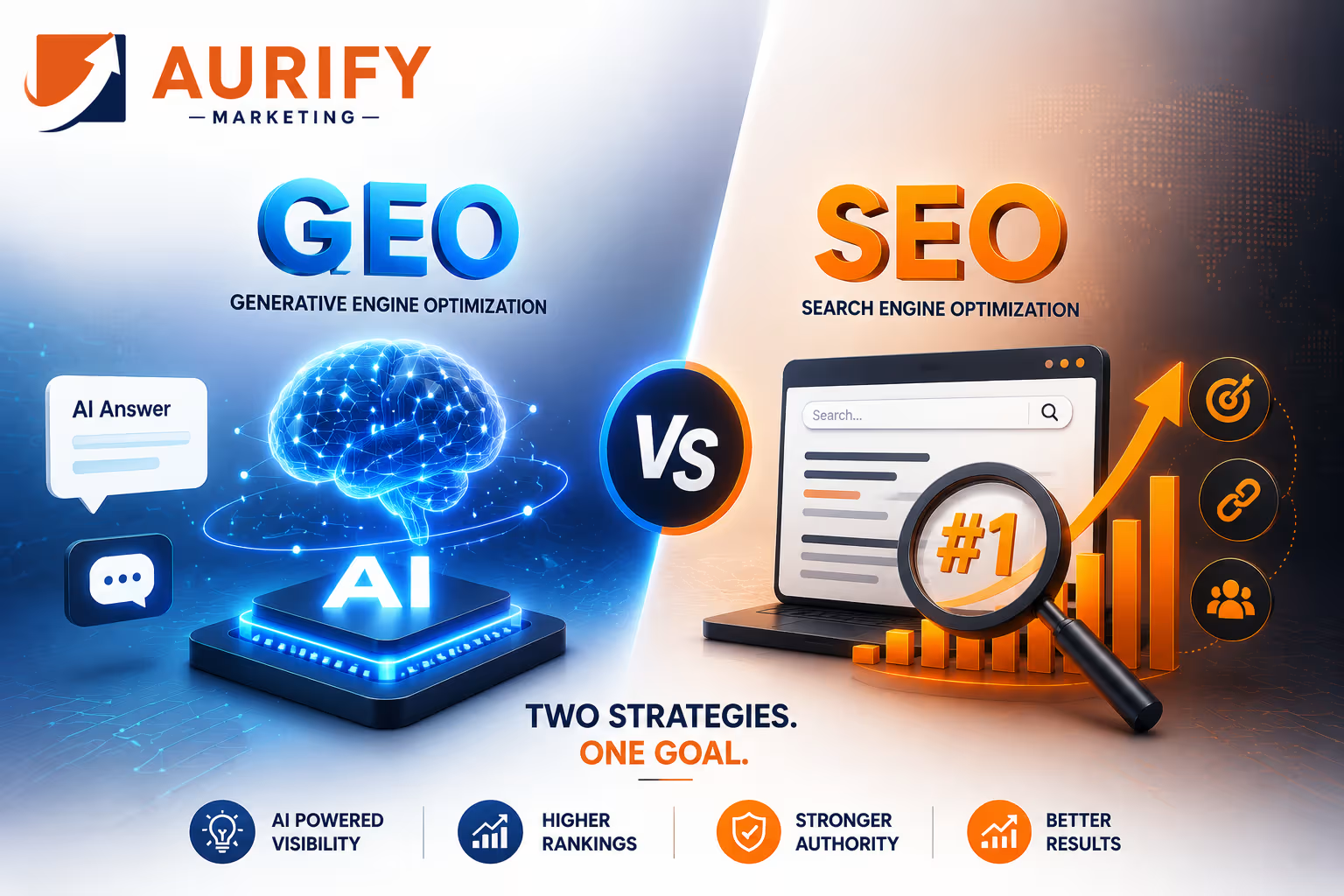
GEO vs SEO: Key Differences
Feature | SEO | GEO |
Goal | Rank websites | Appear in AI answers |
Platform | Search engines | AI search tools |
Content Style | Keyword-focused | Context-rich |
User Action | Click links | Read AI summaries |
Optimization Focus | Rankings & backlinks | Authority & structure |
Success Metric | Traffic | AI visibility |
.
Which Strategy Matters More in 2026?
The truth is simple:
SEO is still essential
GEO is rapidly emerging
But their importance depends on your business goals.
When SEO Matters More
SEO is critical if you want:
Lead generation
Google rankings
Long-term organic growth
Without SEO, your website has no foundation in search.
When GEO Matters More
GEO is important if you want:
AI visibility
Brand mentions in OpenAI ChatGPT
Future-ready search strategy
Authority in conversational search
GEO helps your brand appear where users are increasingly spending time.
The Smart Answer: Use Both
The real winning strategy is not GEO vs SEO.
It is: GEO + SEO together
SEO brings users to your website.
GEO brings your content into AI-generated answers.
Together, they maximize visibility everywhere.
How to Optimize for SEO + GEO Together
Create High-Quality Content
Write detailed, original, and helpful content that solves real problems
Use Clear Structure
Use headings, bullets, and FAQs so AI and Google can easily understand your content.
Focus on User Intent
Write for real human questions, not just keywords.
Strengthen E-E-A-T
Experience, Expertise, Authority, Trust These signals help both Google and AI systems determine whether your content deserves visibility
Build Authority Across the Web
Mentions, citations, backlinks, guest posts, digital PR, and industry recognition help establish your brand as a trusted source.The more authority your brand has, the more likely it is to rank in search results and appear in AI-generated answers.
Use Conversational Language
AI systems are designed around natural language.Write content that directly answers questions in a clear and conversational way.
The Future of SEO and GEO
The future of search is not about choosing one strategy over the other.
It is about integrating both.
Over the next few years, we can expect:
More AI-generated search experiences
Greater emphasis on content quality
Increased importance of E-E-A-T
Growth of conversational search
Stronger integration between search engines and AI assistants
Businesses that adapt early will gain a significant competitive advantage.
The brands that combine SEO and GEO effectively will dominate both traditional search results and AI-generated answers
Final Verdict: GEO vs SEO in 2026
When comparing GEO vs SEO, the answer is clear, SEO is not dead. GEO is not replacing SEO. Instead, GEO is becoming an important extension of modern search optimization. SEO remains the foundation for traffic, rankings, and online visibility.GEO expands that visibility into AI-powered search experiences.In 2026, the most successful businesses will not choose between SEO and GEO.
If you want sustainable growth, strong search visibility, and future-proof digital marketing results, your strategy should focus on:
SEO for rankings
GEO for AI visibility
Both for maximum online presence
FAQs (Frequently Asked Questions)
Is GEO replacing SEO?
No GEO is not replacing SEO. It complements SEO by helping content appear in AI-generated responses while SEO continues to drive website traffic.
What does GEO stand for?
GEO stands for Generative Engine Optimization, a strategy focused on improving visibility within AI-generated search results and answers.
Is SEO still relevant in 2026?
Yes. SEO remains one of the most effective digital marketing strategies for generating organic traffic and building long-term online authority.
How can I optimize content for GEO?
Focus on high-quality content, clear structure, E-E-A-T principles, conversational writing, and answering user questions comprehensively.
Which is better: GEO or SEO?
Neither is better on its own. The strongest strategy combines GEO and SEO to maximize visibility across traditional search engines and AI platforms.