
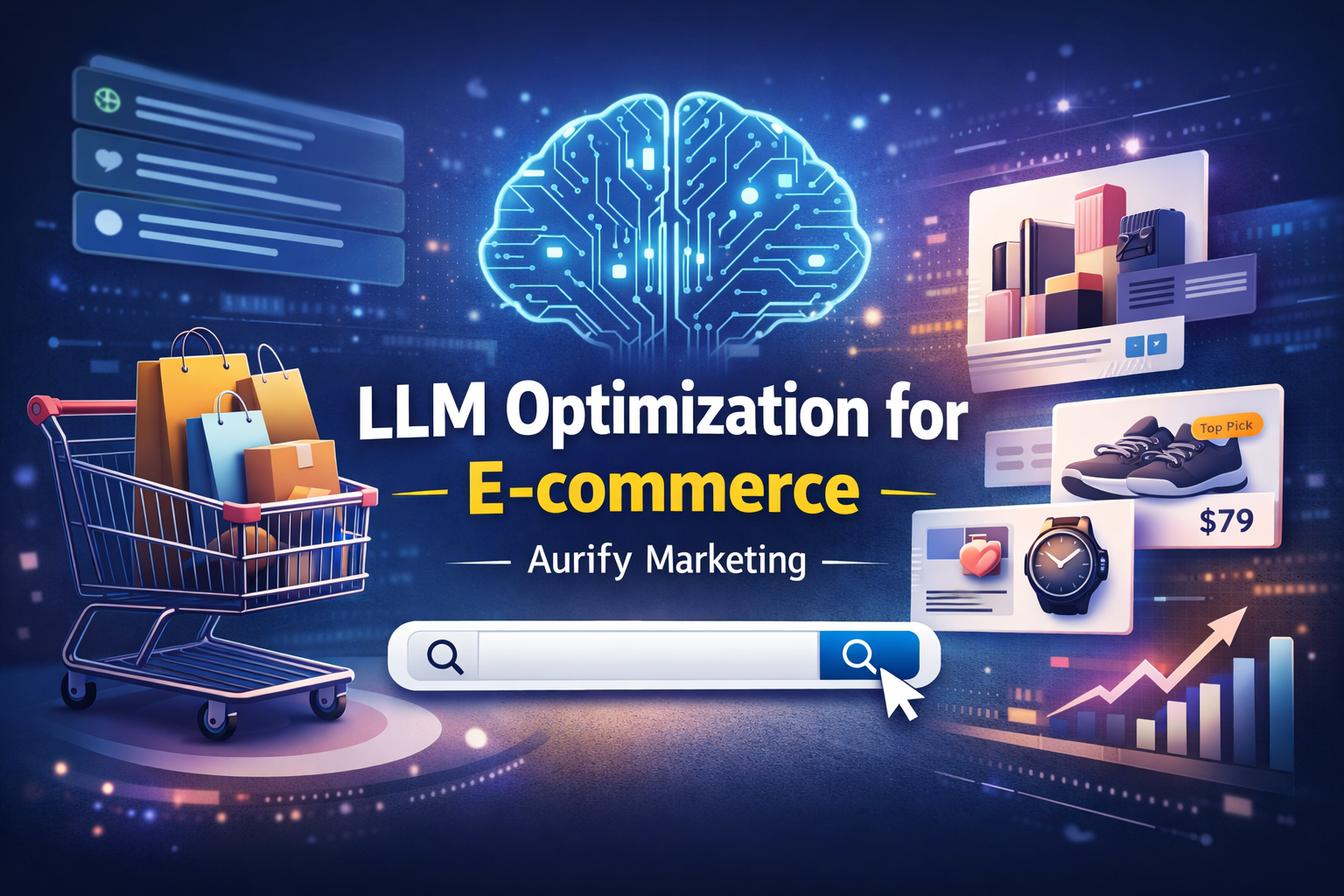
Search is no longer just about blue links and rankings. Today, people ask questions on platforms like ChatGPT, Gemini, and other AI tools and get direct answers instead of browsing multiple websites. This shift is changing how customers discover products and how brands compete for visibility.
For e-commerce businesses, this is a critical moment. If your products are not included in AI-generated answers, you are invisible at the most important stage of the buying journey.
This is where LLM optimization comes in.
At Aurify Marketing, we help e-commerce brands adapt to this new search environment by making their products easier for AI systems to understand, recommend, and trust.
Understanding LLMs in E-commerce
Large Language Models, or LLMs, are advanced AI systems trained to understand language, context, and intent. Unlike traditional search engines that rely heavily on keywords, LLMs focus on meaning.
When a user searches for something like “best budget gaming laptop for students,” an LLM does not just match keywords. It analyzes intent, compares options, and delivers a curated answer.
This changes everything for e-commerce brands.
Instead of competing only for rankings, you are now competing to be part of the answer.
Why LLM Optimization Matters for E-commerce
Better Product Discovery
Traditional SEO can help you rank on search engines. But LLM optimization can place your product directly inside AI-generated answers. This means your product shows up exactly when a user is making a decision.
Higher Intent Traffic
Users asking detailed questions are usually ready to buy. When your product appears in these responses, you attract visitors who already know what they want.
Personalized Recommendations
AI tools match products with very specific user needs. If your product data clearly highlights features and use cases, it becomes easier for AI to recommend your products over competitors.
Visibility in Zero-Click Searches
More users now get answers without clicking on websites. If your brand is not part of these answers, you lose visibility. LLM optimization ensures your brand stays present even in zero-click environments.
Key LLM Optimization Strategies for E-commerce Brands
Structure Your Product Data Properly
AI systems rely on structured and well-organized data. Every product page should clearly define price, availability, features, and specifications.
Go beyond basic details. Include attributes like material, use case, target audience, and benefits. The clearer your data, the easier it is for AI to understand and recommend your products.
Write for Intent, Not Just Keywords
Most product descriptions only focus on features. That is not enough anymore.
Explain what problem the product solves and who it is for. For example, instead of just saying “ergonomic chair,” explain that it is designed for long working hours and helps reduce back pain.
This type of content aligns better with how AI systems interpret queries.
Add Conversational Content
Think about how people actually ask questions.
Include natural language FAQs on product and category pages. Questions like “Is this good for daily office use?” or “Is it suitable for tall users?” help AI match your content with real queries.
Build Brand Authority
AI models trust brands that are mentioned across reliable sources.
Focus on getting featured in blogs, news articles, and industry websites. Encourage customer reviews and maintain a positive online reputation.
The more your brand is discussed in relevant contexts, the more likely AI systems are to recommend it.
Keep Content Updated
Outdated information reduces trust. Regularly update product pages, blogs, and specifications to keep everything accurate and relevant.
Fresh content signals reliability to both search engines and AI systems.
Improve Technical Performance
Your website should be fast, mobile-friendly, and easy to crawl.
If AI systems cannot access or understand your pages properly, your chances of appearing in AI-generated answers drop significantly.
Common Mistakes to Avoid
One of the biggest mistakes is relying too much on generic AI-generated content. If your content does not offer unique value, it will not stand out.
Another common issue is ignoring conversational queries. Many brands still focus only on short keywords and miss out on detailed, high-intent searches.
Some businesses also fail to manage their online reputation. Negative reviews and poor sentiment can directly affect how AI systems perceive your brand.
Lastly, outdated content can quietly damage your visibility. Regular updates are essential to stay relevant.
Why E-commerce Brands Must Act Now
The shift to AI-driven search is happening fast. This is not a future trend. It is already shaping how users search, compare, and buy products.
Brands that invest in LLM optimization today will gain a strong advantage. They will appear in recommendations, build trust faster, and capture high-intent customers.
Those who delay will struggle to stay visible.
At Aurify Marketing, we help e-commerce businesses implement practical LLM optimization strategies that improve visibility, increase conversions, and prepare brands for the future of search.
Conclusion
LLM optimization is redefining how e-commerce brands compete online. It is no longer just about ranking on search engines. It is about being the answer users see first.
By focusing on structured data, intent-driven content, and strong brand authority, businesses can ensure their products are understood and recommended by AI systems.
Aurify Marketing helps brands make this transition smoothly with strategies designed for real results. As AI continues to shape the future of search, the brands that adapt early will lead the market.