

Search engines are evolving rapidly, and traditional SEO alone is no longer enough to stay competitive. With the rise of AI-powered platforms like ChatGPT, Google Gemini, and Perplexity, users now expect fast, accurate, and highly relevant answers instead of browsing multiple websites.
This shift has changed how content needs to be created and optimized. Simply adding keywords is not enough anymore. Today, content must align with user intent, provide in-depth information, and deliver real value.
This is where AI content optimization plays a crucial role. It helps businesses create smarter, data-driven content that performs better in both search engines and AI-driven platforms.
What Is AI Content Optimization?
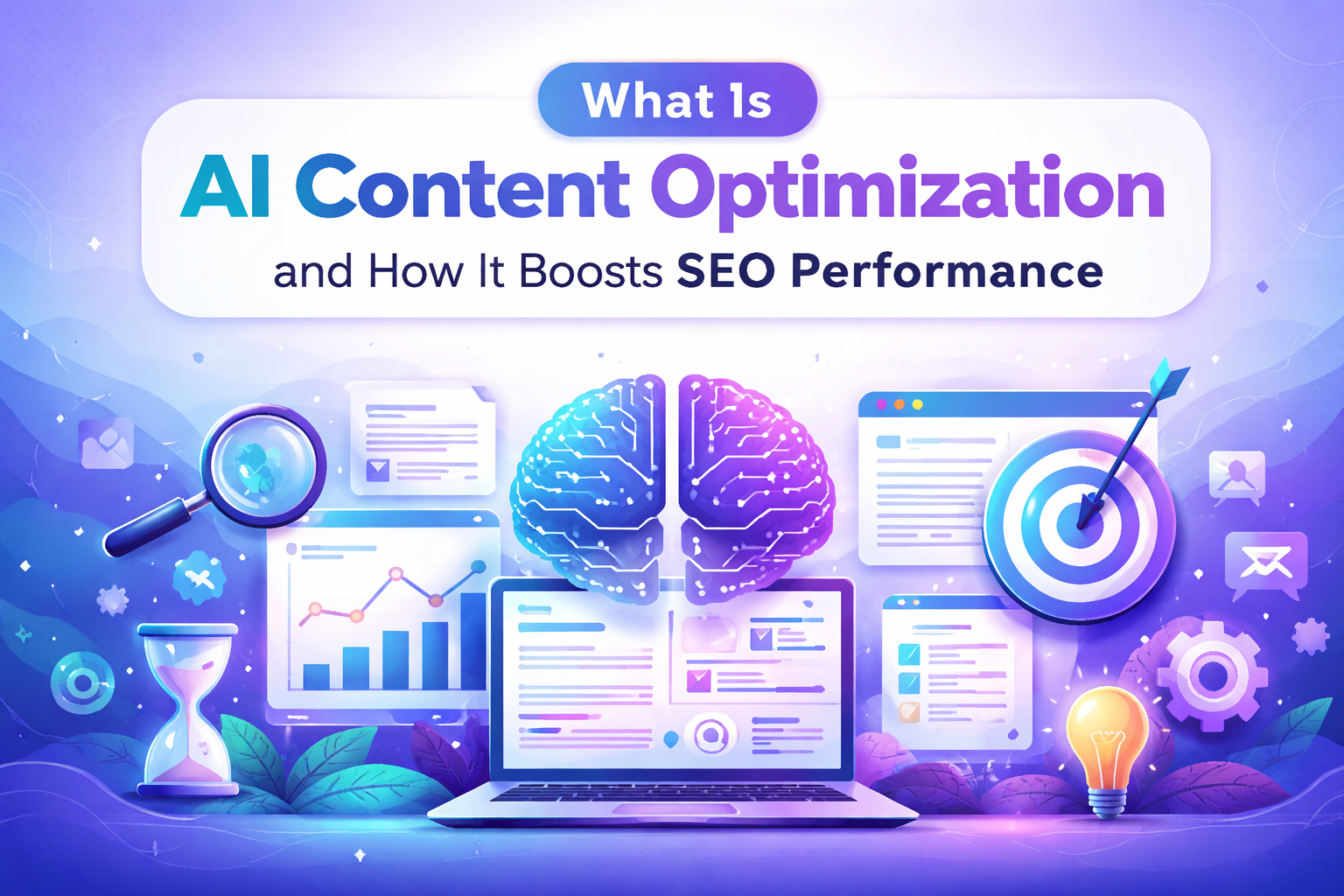
AI content optimization is the process of using artificial intelligence and machine learning tools to improve the quality, structure, relevance, and performance of content.
Unlike traditional SEO, which focuses mainly on keyword placement, AI analyzes large datasets to understand:
User search behavior
Content performance trends
Competitor strategies
Topic relevance and depth
This allows marketers to create content that is not only SEO-friendly but also highly engaging and useful for readers.
For example, instead of just suggesting a keyword, AI tools can recommend:
- Important subtopics to include
- Questions users are asking
- Ideal content length
- Readability improvements
This makes your content more comprehensive and increases its chances of ranking higher.
AI Content Optimization vs Traditional SEO
There is a significant difference between traditional SEO methods and AI-driven optimization.
Traditional SEO Focuses On:
Keyword density
Meta tags and headings
Backlink building
Basic on-page optimization
AI Content Optimization Focuses On:
- User intent and behavior
- Semantic relevance (context of content)
- Content depth and quality
- Engagement signals (time on page, bounce rate)
AI goes beyond basic optimization and helps you understand why certain content ranks and how to improve your own content accordingly.
Why AI Content Optimization Is Important for SEO
AI content optimization is becoming essential because search engines are getting smarter. Google now prioritizes content that is helpful, relevant, and user-focused.
Here are some key benefits:
1. Better Search Rankings
AI helps structure your content in a way that aligns with ranking factors, increasing your chances of appearing on the first page.
2. Improved User Experience
Content becomes easier to read, more engaging, and more informative.
3. Higher Engagement
AI-driven insights help reduce bounce rates and increase time spent on your website.
4. Stronger Topical Authority
By covering topics in depth, your website becomes more trustworthy in your niche.
5. Visibility in AI Search
Optimized content is more likely to appear in AI-generated answers and featured snippets.
Top AI Content Optimization Strategies
To get the best results, you need to implement the right strategies. Below are the most effective ones:
1. Data-Driven Keyword Research and Clustering
Instead of targeting a single keyword, AI groups related keywords into clusters based on user intent.
This helps you:
- Create pillar content
- Cover topics comprehensively
- Avoid keyword cannibalization
For example, instead of writing multiple small articles, you create one strong, detailed guide.
2. Content Personalization Using AI
AI tools analyze user behavior such as:
Click patterns
Time spent on pages
Content preferences
Based on this data, you can:
Adjust tone and style
Improve formatting
Deliver better user experience
This keeps visitors engaged and improves SEO signals.
3. Content Gap Analysis
One of the most powerful features of AI is identifying what your competitors are doing better.
AI tools scan:
Competitor websites
Ranking pages
Missing topics
This helps you:
Discover new content ideas
Fill missing gaps
Capture more traffic
4. NLP-Based Content Optimization
Search engines use Natural Language Processing (NLP) to understand content context.
AI tools help you:
Add relevant keywords naturally
Include important entities
Improve semantic relevance
This ensures your content matches what users are actually searching for.
5. Answer Engine Optimization (AEO)
With AI search on the rise, your content must be optimized to provide direct answers.
Best practices include:
Writing clear definitions
Using bullet points
Adding FAQ sections
Structuring content properly
This increases chances of appearing in:
Featured snippets
AI-generated responses
Best AI Content Optimization Tools
Using the right tools makes implementation easier and more effective.
Surfer SEO
Provides real-time optimization suggestions based on top-ranking pages.
Clearscope
Focuses on improving content relevance using semantic analysis.
MarketMuse
Helps with content planning and identifying ranking opportunities.
Frase
Generates content briefs and identifies user questions.
Grammarly
Improves readability, tone, and clarity of content.
Common Challenges in AI Content Optimization
While AI offers many advantages, there are some challenges to consider:
1. Over-Reliance on AI
Too much automation can make content sound generic. Human creativity is still essential.
2. Accuracy Issues
AI tools may provide outdated or incorrect information. Always verify facts.
3. Learning Curve
Adopting new tools and workflows can take time.
4. Algorithm Updates
Search engine updates may affect how AI recommendations work.
The Future of AI Content Optimization
AI will continue to play a bigger role in SEO. Here’s what to expect:
Hyper-Personalization
Content will adapt in real-time based on user preferences.
Predictive SEO
AI will identify trends before they become popular.
Multimedia Optimization
AI will optimize videos, images, and audio content for better performance.
AI Search Growth
Ranking in AI tools will become just as important as Google rankings.
Best Practices for AI Content Optimization
To get maximum results, follow these best practices:
- Focus on user intent, not just keywords
- Create in-depth, high-quality content
- Use structured headings (H1, H2, H3)
- Add FAQs and clear answers
- Optimize for readability
- Combine AI insights with human expertise
Conclusion
AI content optimization is transforming the way businesses approach SEO. It allows you to create smarter, more relevant, and high-performing content that meets both user expectations and search engine requirements.
By using AI tools and strategies effectively, you can improve your rankings, increase traffic, and stay ahead of your competitors.
However, the key to success lies in balancing AI automation with human creativity. When used correctly, AI becomes a powerful tool that enhances your content strategy and drives long-term growth.